Olaf Meyer's shop is not an unusual shop. 3,500 SKUs. Two locations and a stockroom in Berlin. Phones and power banks that carry IMEI numbers, because a warranty is only worth something if you know which device went to which customer. Seventy percent of sales on card. And a DSL line that dies, on average, once a week.
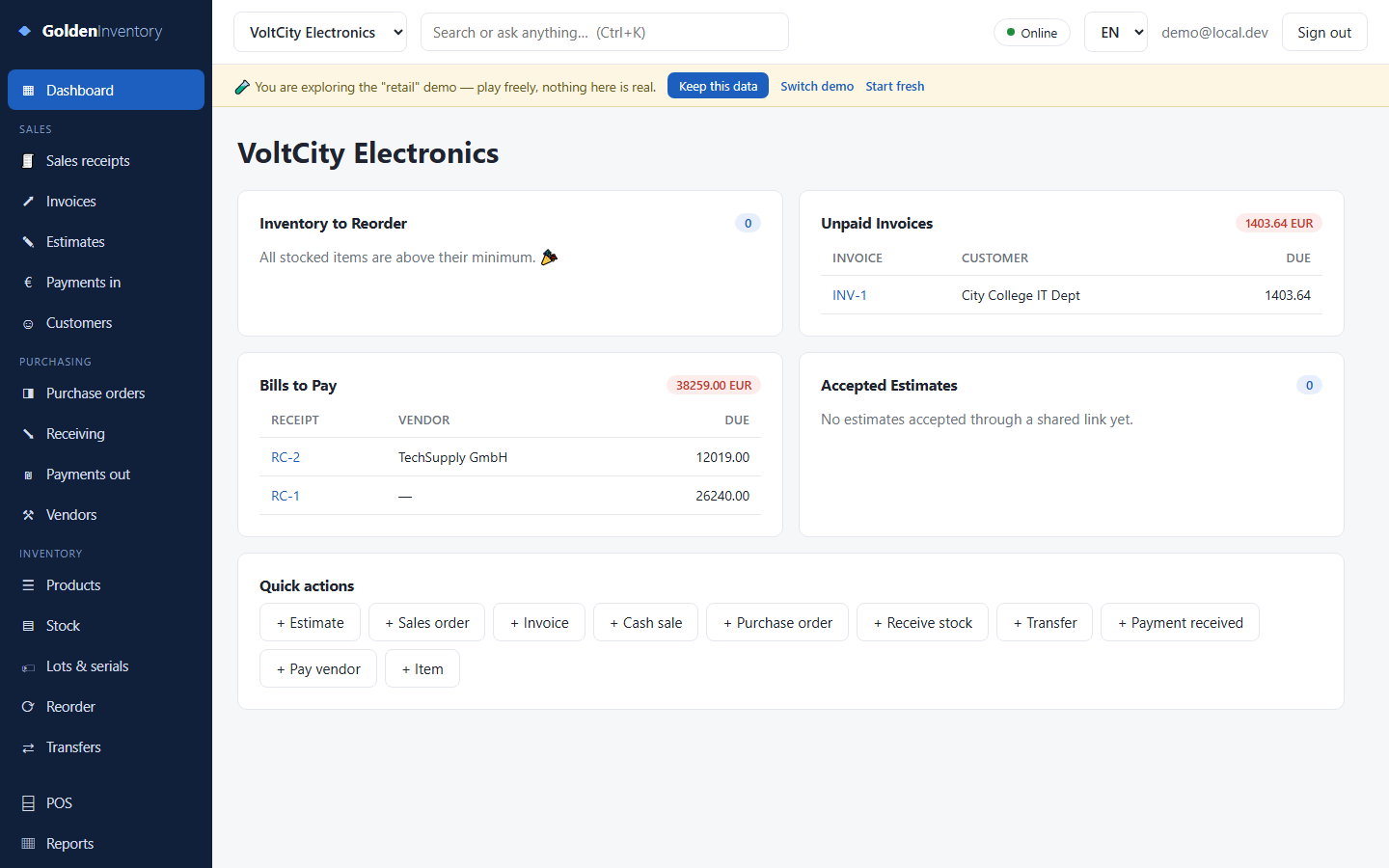
Olaf had tried three "cloud POS" systems. They all died with the line. So when he set up Golden Inventory, he did what the landing page told him: he created the company, picked retail as the business mode, and watched the app reshape itself — Products, not Items; no kitchen screens, no wholesale scan stations; the dashboard leading with what a shop owner actually watches: reorder alerts, unpaid invoices, the day's takings.
The morning delivery
The cartons from TechSupply land at 9:00. Receiving in Golden Inventory is a document, not a spreadsheet: scan the cartons, and for the three serialized iPhones the app demands one IMEI per unit before it approves the receipt. From that moment, every one of those phones has a lot, a serial, a warranty trail — and a place on the shelf the till will find it in.
11:40 — the line goes down
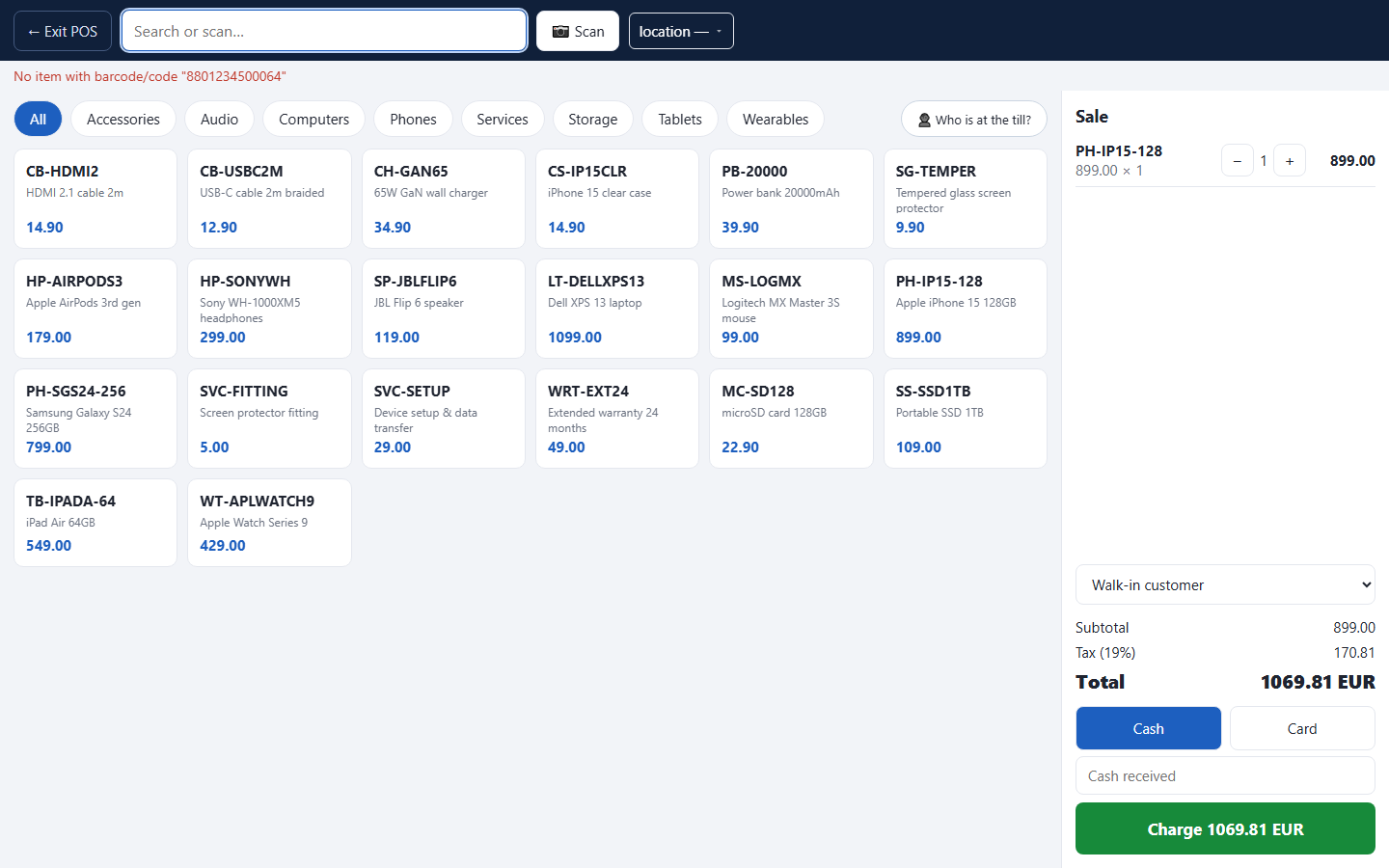
Four customers deep, the card terminal blinks, and the DSL drops. Olaf doesn't reach for paper. The till keeps scanning and keeps selling: receipts are numbered from pre-reserved device blocks, the sale is queued locally, and the moment the line comes back — two hours later, at the worst moment possible, obviously — every offline sale syncs and lands in the documents with its final, non-local number. Nothing is double-counted, nothing is lost, and the day's numbers still agree with the till.
The afternoon, by the numbers
At 15:00 the reorder screen compares on-hand against every product's minimum and target, and turns what's below par into one draft purchase order per vendor — quantities already computed, one click to send. Twenty cases move to the stockroom as a transfer order. And when the B2B customer from the IT college asks for an invoice with terms, the invoice is approved with a partial bank payment on it — a real accounts-receivable balance the shop can chase, not a scribble.
The evening, in one screen
The Z-report closes the day per method — cash, card with terminal references, bank — and the report builder answers the question that actually pays rent: what did we make on phone cases this month? The 19% and 7% VAT stay in their own buckets, so the VAT report is correct without an accountant's evening shift.
The story of the day is the story of the product: receiving with serials, barcodes at the till, a two-hour outage that changed nothing, par-level reordering, B2B invoices with real balances, and an evening report that matches the cash drawer. No export, no reconciliation evening, no "we'll fix it in the morning."