Marco Bellini's pasta is not the hard part. The hard part is the ledger behind it: forty-five dishes, each one a recipe that quietly consumes flour, tomatoes and mozzarella; a counter that sells the same pizza for 7% takeaway and 19% at a table; and a terrace where the Wi-Fi dies exactly where the waiters stand.
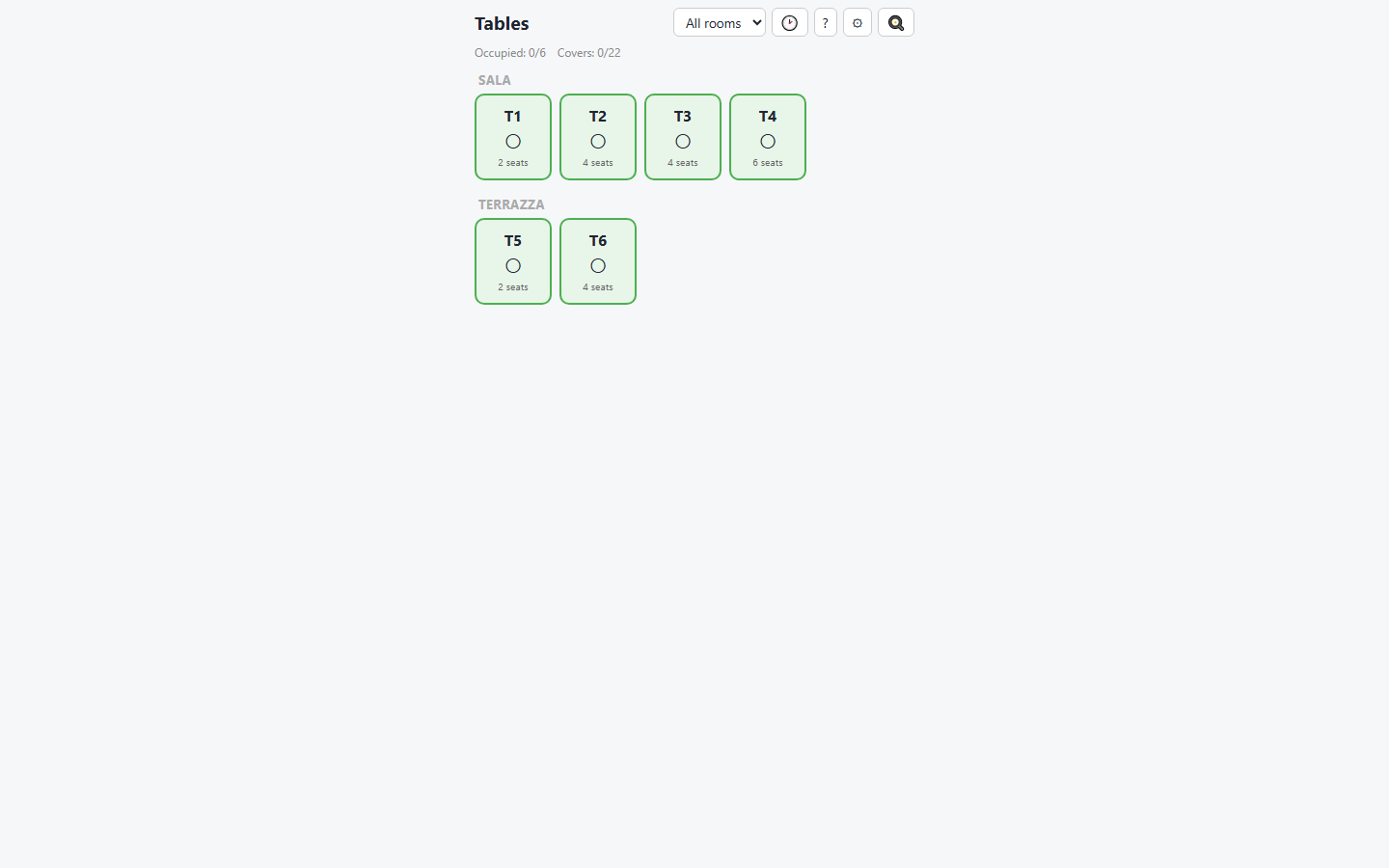
Golden Inventory came in as the restaurant mode: the app reshaped itself into tables, kitchen, and waste — no catalogue speak, no work orders. Menu & Ingredients is the vocabulary now. The manager's screen leads with the floor: twelve tables in the Sala, six on the Terrazza.
The morning delivery
Forty kilos of flour, twenty of tomatoes, dairy, eggs, guanciale. One receiving document, and the units do what kitchens actually do: buy by the kilo, use by the gram. The receipt lands in stock converted automatically, and the perishables carry their lots with expiry dates, so the walk-in cooler has a memory.
11:30 — the counter and the terrace
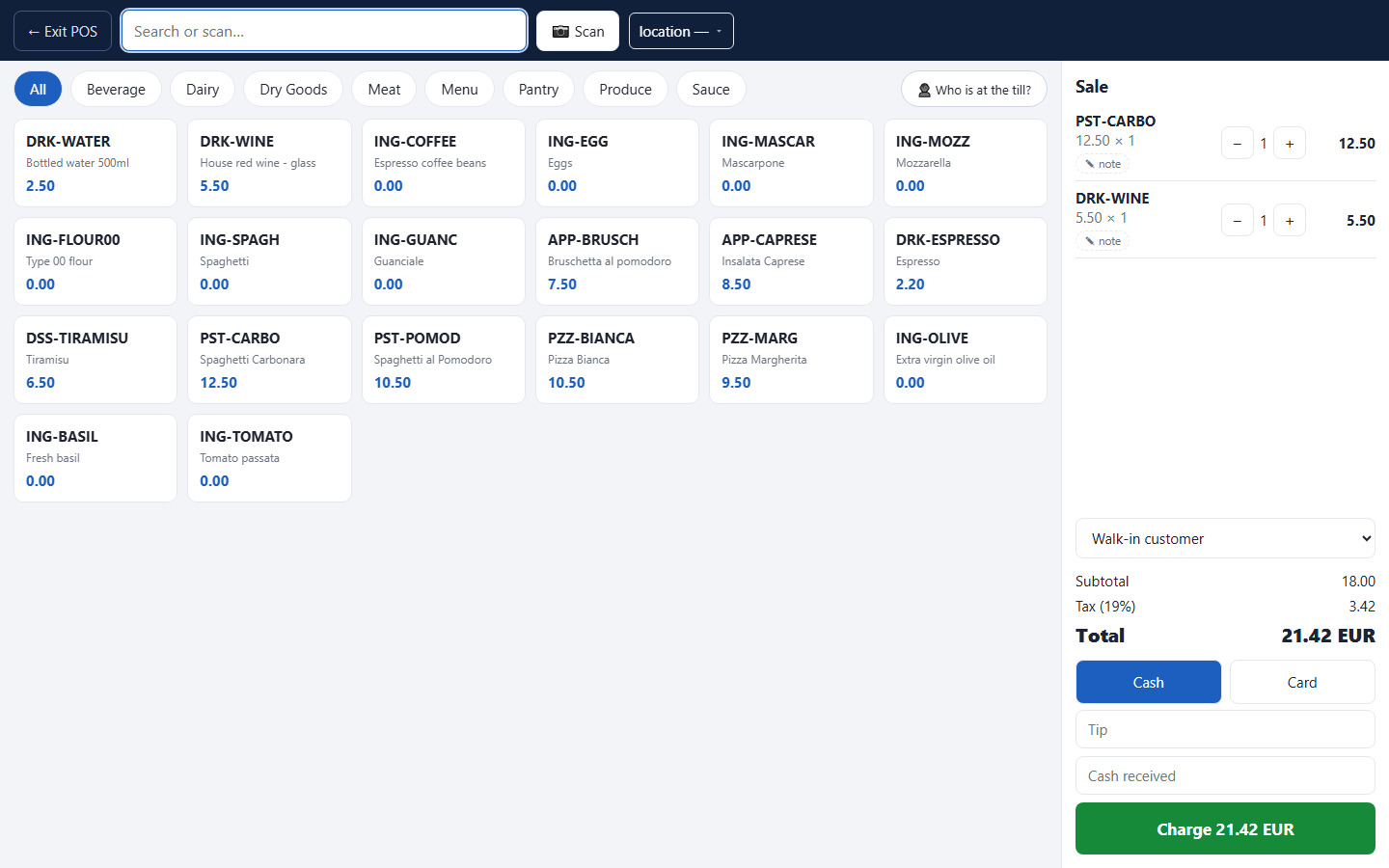
At lunch the counter sells two Margheritas to go — 7% VAT — while table four runs carbonara, wine and tiramisu at 19%. The till keeps the two rates apart without a second thought, and the Z-report will too. Each sale fires the dish to the kitchen display and backflushes the recipe: the flour, the eggs, the guanciale leave stock the moment the plate leaves the pass.
14:00 — split the bill, keep the queue
Table six wants the bill split by seat: two cards, one cash. The tab splits per seat, each payment lands with its terminal reference, and the table frees itself the moment the last share is settled. On the terrace, where the dead spot eats the signal, the waiter's phone queues tabs and orders offline and syncs them the moment he steps back into range — no order lost, no double-posted bill.
15:30 — what burned, and what it cost
One and a half kilos of tomato passata go dark in the pan. Marco logs it as waste — a document, not a shrug — so the evening's food-cost report knows the sauce actually died. At 17:00 the expiry list and the menu-engineering quadrant tell him what to push and what to use up.
23:00 — the day, closed by method
The Z-report closes the day by payment method — cash, card with terminal references, bank — and the reorder screen turns tomorrow's par levels into one draft purchase order per supplier. The evening's question is not "what did we sell?" but "what did it cost us to sell it?" — and the answer is already on the screen.